
After creating two sets of wings, Daedalus taught his son Icarus to fly. Icarus was warned not to fly too high, for the sun would melt the wax that attached the feathers; but not too low, for the sea spray would wet the feathers and weigh down his wings. So much of life finds us probing the edges of extremes—getting closer and closer to the fire without getting burned. There comes a point where our limits are no longer relative but represent brinks of tolerance that go beyond simple comfort.
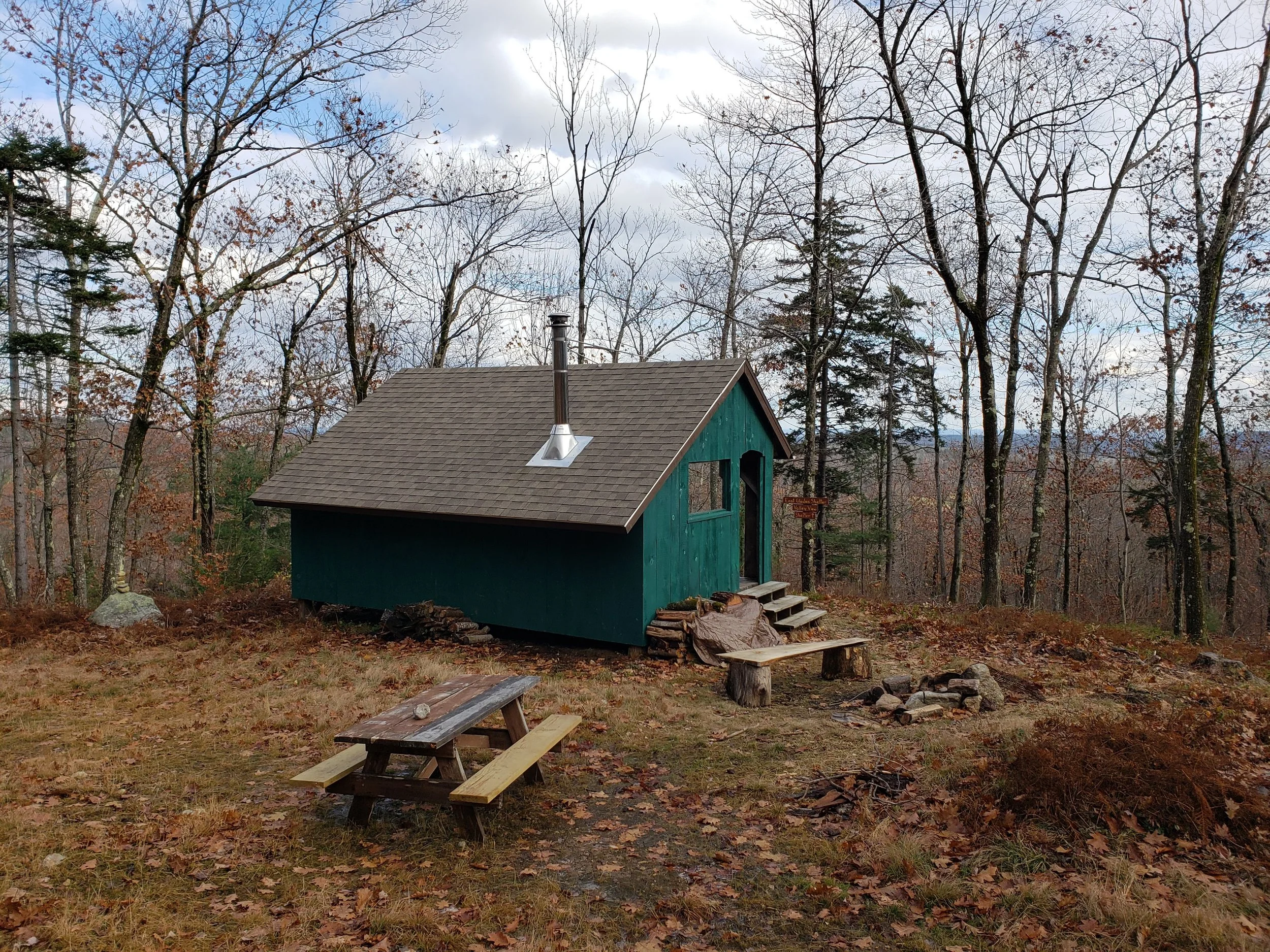
It was mid-November, and I sat in a Crazy Creek chair staring into the embers of a wood stove. My dog, Scout, lay tucked into her sleeping bag atop a minivan seat nearby. We were both trying to stay warm in the three-sided shelter placed near the top of a ridge overlooking the bumpy terrain of Southern New Hampshire. The stove’s orange belly glowed like a jack-o’-lantern in the night, flickering taunts of heat. I scooted closer to the opening.
The wooden shelter was much too large for the stove to offer anything more than a distraction from the elements. Scout and I arrived in the early afternoon after hiking a little over a mile from the trailhead. A steady wind whistling through leafless branches beckoned us across the landscape of the cross-country ski area aptly titled “Windblown.”
I checked my watch—only 7:06pm. It was dark, and I had already eaten a bowl of Knorr Butter and Herb noodles—a camping favorite. Scout enjoyed a little broth poured over her puppy chow. If I stayed in front of the fire as I was dressed, I was sure to get hypothermia overnight from the below freezing temperatures and 30-mph wind gusts.
“It’s time for bed, Scout,” I said, squinting into the darkness towards her.
I doubled up the two 30-degree bags I brought, and we both crawled inside. Scout burrowed to the base and lay next to my legs. As I lay on the cot, I chided myself for not being better prepared for the weather and bringing our 0-degree bags. I likely would have avoided the lesson that followed, but that’s what happens when approaching extremes—lessons are inevitable.
An hour passed. We were both shivering. Remembering the teachings of a basic survival training from a few years earlier, I decided to make some changes to our sleeping arrangements. We got out of the sleeping bags and braced ourselves against the frigid air. I put the sleeping bags and pad on the floor and retrieved the plastic drop cloth, recommended packing for any outdoor activity, from my backpack and started to build a hypo-wrap.
First layer: Plastic drop cloth opened and spread out over the cot with about four feet on either side.
Second layer: Crazy Creek chair unfolded and placed under my torso and bottom, topped with a Therm-a-rest sleeping pad.
Third layer: Two sleeping bags, one inside the other and zipped up.
I wrapped the drop cloth sides over the bundle like a swaddle and then slid my way in. It took a bit to coax Scout to get into the sleeping bag again, and then it took longer to get her to lay next to my chest where we both had access to fresh air. While rutching around, we were generating heat and the bags were toasty warm in no time!
It was a night of quantity over quality sleep, and after 12 hours, we were greeted by the rising sun. I thought of Icarus flying so high that the wax on his wings melted, and he plummeted to his death in the sea. Without preparation, heeding the advice of others, and following my intuition, I too could have plummeted.
This overnight trip offered me an opportunity to test my preparedness: the trip planning, in the moment decision-making, and ability to maintain a positive mental attitude. I’m grateful that much of my life falls well within the comfort zone. There are times though where I feel called to get closer to the edges—to know my limits.
These extremes, the edges of what is acceptable, define the path of comfort we each follow. It’s a wider path for some and narrower for others, but the edges are perilously fine.